Showing posts with label Spain. Show all posts

Monday, April 5, 2021

Passport Full of Dreams - A travel journal turned into a survival story

It's finally here!

I have put my whole heart into writing this book and I hope that it will bring my readers joy (along with a few tears) and perhaps encourage more people to share their own story. 

My self-help memoir is about traveling, adventure and yoga, falling in love, falling apart, falling down and rising back up.

It would mean the absolute world to me if you wanted to read the book. Part of the royalties will be donated to organisations that support mental health and/or education for young people in Ecuador. 

Please leave a comment or reach out me through social media if you would like to buy a copy.

 
Passport Full of Dreams - A travel journal turned into a story of survival


Friday, July 31, 2020

May you go further than the stars

It was always my dream to do the pilgrim walk to Santiago de Compostela so, when the leaders of my hiking group sent out an invitation to walk the last part of the Camiño de Santiago Portugués, I immediately accepted. There was no time to prepare, but after years of dreaming, I was more than ready for this challenge.


The adventure began with a twelve-hour car ride from southern Andalusia to Tui in northern Spain, our starting point close to the Portuguese border. Twelve hours in a van with a group of Sevillanos, all of us wearing our face masks of course. Spaniards are known to speak faster than bullets leave machine guns and the decibel of their speech has been recorded as one of the highest in the world, which may be why life in Spain often reminds me of a book title by Jonathan Safran Foer: Extremely loud and incredibly close

Only when we arrived at our first hostel did one of the women that I was sharing a room with say to the other: "Turn down the volume, please - we're in Galicia now."
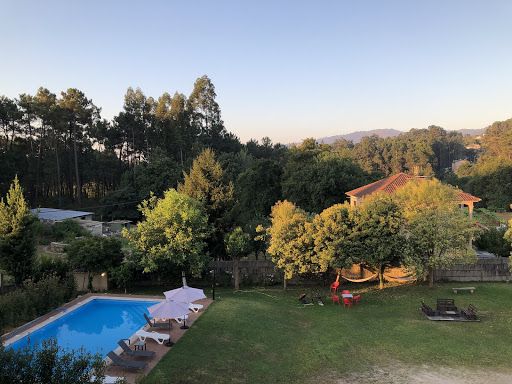
Our first hostel had a pool,
which was heaven after a long day of hiking
Start of the Camino
Our first encounter was with a Gypsy woman wailing on the side of the road as we drove through a small Portuguese town. We didn't speak her language so the villagers explained that today was the day of her husband's funeral, he had committed suicide a week earlier and left her here on their doorstep with his pain. I tried to look into her eyes but she saw nothing and heard no one; even surrounded by people eager to console, she was alone with her grief and somehow, she will have to move on and find a new normal. 

On our first day of walking, I started thinking about what I need to be happy, and I came to the conclusion that I really don't need much. I certainly don't need many material things - of all the clothes I brought for the Camino, I could have done just as well with half. The lighter the backpack, the easier the walk.


Along the path, there are many messages and signs and one that you will see everywhere is the Latin word Ultreia, which means "May you go further than the stars." Amongst poetry painted on walls and hearts carved into trees, we came across a yellow and blue pair of shoes with a sign saying: "Yo hago Camino, NO maratón - I'm doing the walk, NOT a marathon." The path is the destination, hence there is no need to run towards the finish line. There should always be enough time to take a break, enjoy the surroundings, gaze at the goats, swim in the waterfalls, and watch the stars at night.


After a few days, I felt comfortable enough to let go of the need to engage in conversation all the time. Sometimes, I would walk by myself, other times in silence with someone next to me. Occasionally, an interesting topic would come up and we would walk and talk until we were out of breath. However, I also learned the skill of tuning out from the incessant chatter around me and tuning in to the sounds of nature instead. Whenever my mind would wander too far off the path, something would happen to bring my attention back, like when we were drawn into the forest by the enchanting music coming from two bagpipers standing behind a stone cross.

 
One of my biggest challenges was being hungry most of the time. On the second day, I only ate a small salad, which led to feeling weak and unmotivated on the third day. The hostels we stayed at served a good breakfast and during the walk, I would munch on dried fruit and nuts, but as much as we were moving, it wasn't enough. I hadn't realized that finding gluten-free vegan food would be so complicated in Galicia, or else perhaps I would have prepared differently.

On the other hand, there were other things that I had unnecessarily worried about before the trip, such as getting lost. The Camino is very well marked, all you have to do is follow the signs. Not having the right clothes was also a concern, just like blisters, sore legs, or a possible arthritis flare-up, none of which happened even though I didn't even have proper hiking shoes. I did the whole walk in my Nike trainers and it was absolutely fine.


Obviously, we considered the risks of Covid-19, but we mostly stayed within our group, wearing face cover and maintaining distance. I feel much safer up in the mountains than out on the streets anyway. Sunburn and fatigue are also valid issues to keep in mind and there were definitely moments, even days when I didn't want to put one foot in front of the other anymore. To keep going, I would think of something a Finnish war veteran said when he visited my school long ago: "You'll be surprised at how far you can walk after you think you can't walk anymore."

In total, we walked 120 kilometers in six days. In order to get the official stamp and certificate, you need to walk at least 100 kilometers but, certificate in hand, I can assure you that this is not what the Camino is about. What matters more is reflecting, pushing your limits, finding something beautiful inside yourself, and learning from the people that you meet along the way. 


They say that on the Camino, you will never walk alone. I experienced this through God's powerful presence, as churches and crosses are everywhere, but we also crossed paths with some interesting characters, for example, an elderly woman in a green bikini and a golden cross, who was feeding a goose on the beach. She told us that the bird's name was Chris, he's about six years old and she loves him more than her dog.


At a café by the side of the road, we met a man in his 80s with three golden crosses around his neck, selling charms in the shape of cats and shells. "Why does one have to die at 100?" he asked. "Can't they create one of those app things to make us live until 120?" His eyes sparkled as he made us laugh and buy more of his jewelry.  

There was also a woman in her forties walking the Camino on her own and we immediately bonded as it turned out that she was a language teacher like me and about to start a yoga teacher training, too. Then there was a wrinkly Portuguese man with a feathered cane walking in the opposite direction as well as two Australian dudes slowly limping and smoking their way forward on the path. 


On the last day, I walked mostly on my own until another group of Sevillanos caught up with me at a crossroads where I had stopped, unsure of which way to choose. "Are you afraid of us?" they laughed behind their masks, nudging me with their elbows and using silly voices to ask me for a picture. A group of guys in their thirties, they were convinced it doesn't matter whether you go left or right so I followed them to the left. We chatted as we entered the city of Santiago de Compostela together and they asked me about my ambitions in life. 

Reaching the cathedral is one ambition that I have now completed. As I stood there looking up, surrounded by new friends, I thought of all the other pilgrims who have come before me, and those who have yet to arrive. I thought of how one adventure is really just the beginning of another, and how many of us choose different paths in life or advance at a different speed than others, yet eventually, we reach the same destination. After all, as spiritual teacher Ram Dass observed: "We are all just walking each other home."
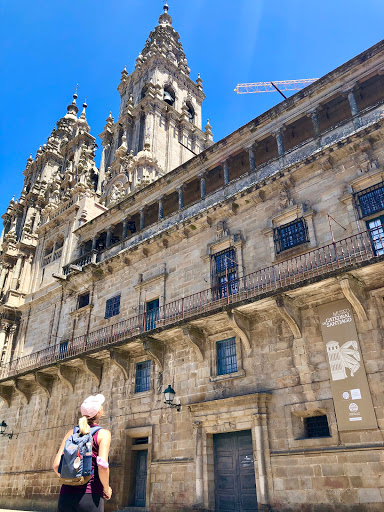
In front of the Cathedral in Santiago de Compostela

Saturday, July 11, 2020

Waves of change

"Ellie, deja que la vida fluye," my Ecuadorian friend W always says to me. Let life flow. I agree with him but as we all know, it's not so easy to let go of control. Before I left my home in Quito, I wrote a post about feeling like I was drowning and a friend that I met in Thailand many years ago commented: "You will float, you will float, you will float". She wasn't wrong and her comment became my mantra whenever I felt myself sinking again, but I don't think she or anyone else could have imagined that it would take two whole years before I would once again trust the ocean enough to stop treading water and just... float. 

It wasn't until I actually went out into the real ocean a couple of weeks ago that I realized I've finally let go of the fight. I have stopped resisting the natural flow of things.


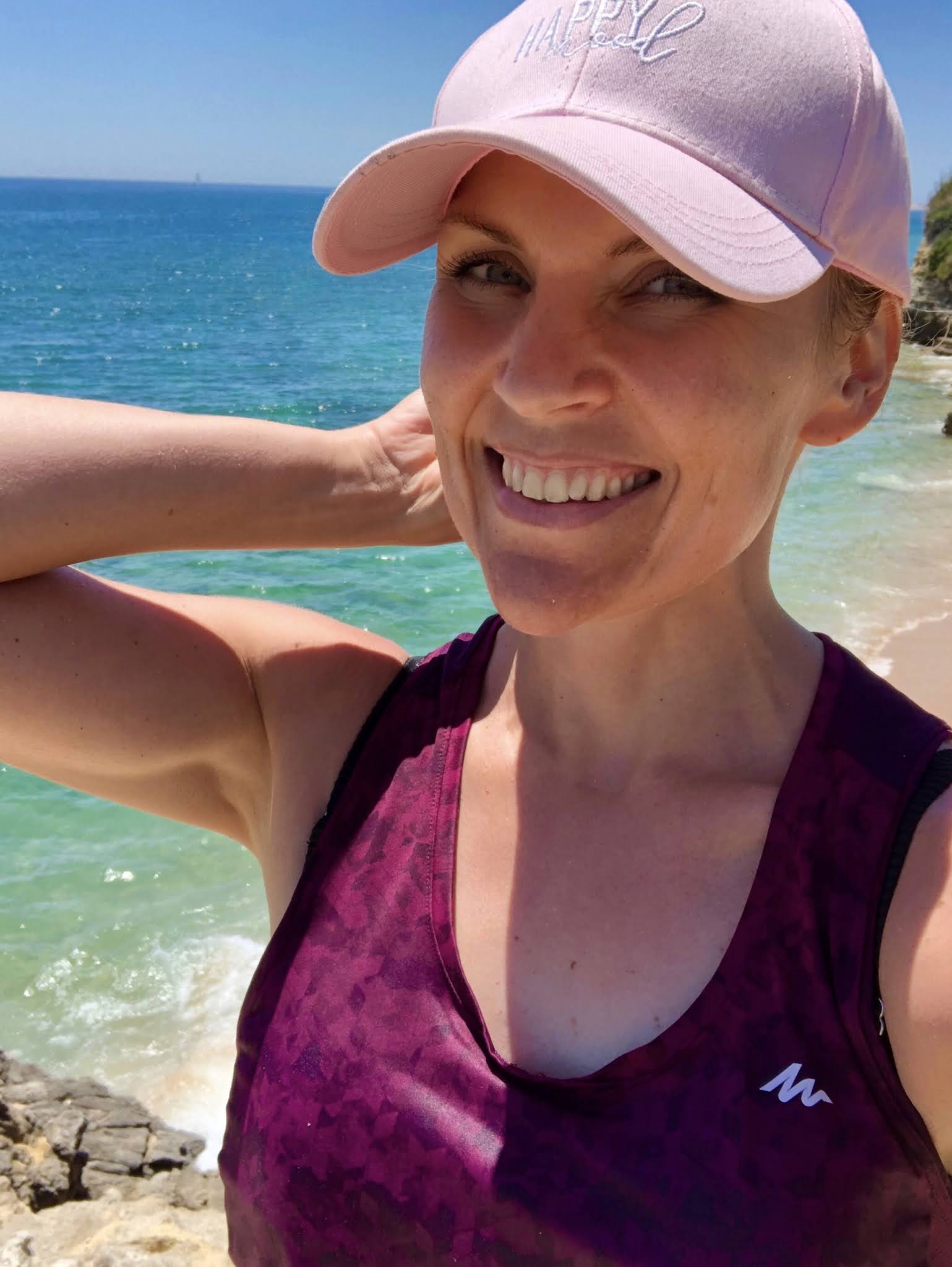
I was on a tour with a group of hikers and setting off in the beautiful hippie paradise called Caños de Meca, we hiked towards the coastal town of Barbate, stopping several times along the way to cool down with a dip in the ocean. Towards the end of our hike, I walked out into the water alone, distancing myself from the group. Out in the deep blue sea, I stretched out my arms and my legs to float on the waves, something I literally hadn't done for years. I have mostly gone to Finland in the winter and last summer, my only contact with water was freezing my toes off in the Atlantic ocean outside Portugal. The beaches in Ecuador are outstanding but there, the waves were too big to swim.

As I was floating around in the crystal blue water, I noticed that all the spaces in my body that used to be filled with something or someone now somehow seemed hollow. I also felt small, in a good way. We are but tiny drops in a vast ocean of uncertainty, but if we move with the waves of change, we may eventually end up where we are supposed to be. 


Due to the Covid-19 situation around the world, I am currently without a job and need to leave my apartment at the end of this month, without knowing where to go or what to do next. That's the thing about floating - it's basically drifting around with no destination.

What I take with me from Seville is a strong sense of community. I have always found support here, whether it's been in the form of friends, fellow hikers, yogis, colleagues, roommates, partners, or my church family. I have reached out for help and equally so, I have been the one to hold out a hand when someone needed me. For my first yoga class, I created a new mantra for myself and my students: I am safe. I am supported. I am loved. 

At the moment, I feel like circles are closing. I recently bought my last monthly pass at the yoga studio that has been like a second home to me for a year. Two months in Seville turned into twelve as I decided to stay and complete a yoga teacher training here and I have no regrets. Never have I dedicated so much effort into something that turned out to be equally rewarding. During the course, I came to understand that the true essence of yoga has very little to do with asanas; it is more about connecting to the breath, finding balance and recognizing the truth within ourselves. I learned how to awaken my senses, surrender to what is, and perhaps most importantly, to experience joy again. 

Even though there are some things, and some people, that I will probably never be able to let go of, I do feel like I have dropped some heavyweights and let them sink to the bottom. I no longer cling to anything or anyone, instead, I try to let things be and go with the flow. I now understand that acting often comes from a place of kindness whereas reacting is based on hurt. Using our breath to center ourselves can help us make a conscious choice between the two. 

If I wanted to label my experiences over the past three years, I could call them illness, shock, betrayal, anxiety, depression, distorted reality, grief, loss, posttraumatic stress... or I could turn things around and name them lessons in love, vulnerability and fear, overcoming, building courage, improving my health, healing and moving on.

The real question is, what happens if we drop all the labels? What remains? 

Maybe the best all of us can do this year is just to keep our heads above water. If we can remain above the surface and keep breathing, I think that is enough.


Sunday, April 7, 2019

48 hours in Granada

He's a carnivore, I'm a herbivore. He's an atheist and a communist while I believe in Jesus and liberal rights. He's also a smoker, an extrovert, a reckless driver and everything else that I'm not. This larger-than-life Andalusian was my guide in the Sierra Nevada mountains and during our four-hour hike, he used more swear words and smoked more cigarettes than anyone ever should, but he also made me laugh more times than I could count. It was the most fun I'd had in a long time.

Meeting my opposite was a great reminder of who I truly am. As my guide, he led me across suspension bridges, held my hand when I slipped on gravel and helped me crawl up to the highest mountain peak before showing me the crosses drawn for fallen rock climbers. Only afterward did he share with me that actually, he's afraid of heights. He invited me for a beer and some blood sausage after the hike and found it hilarious when I asked for an orange soda and some tomatoes instead. 

Hiking near the village of Monachil
The main attraction of Granada is the Alhambra, a majestic fortress hovering over the city. Overtaken by the Catholic Monarchs in 1492, this royal palace is said to be the most popular monument in Spain and one of the world's most amazing masterpieces of Arabic art. It has been declared a Unesco World Heritage site and receives nearly three million visitors a year so if you're planning on traveling to Granada, don't do what I did and forget to book tickets for the Alhambra in advance. Still, I wasn't too disappointed. Walking up to the Mirador San Nicolas at sunset to enjoy the stunning views of the city, the Alhambra and the mountains was enough for me.

La Alhambra
The fortress is not the only piece of Arabic heritage in Granada. As this was the last city to be reconquered by the Christians after centuries of Muslim reign, the Arabic influence is still clearly visible in the architecture, especially in the neighborhood of Albaycín, as well as in the food. My friend and I also felt like we were constantly surrounded by tall, dark and handsome men but then again, this is true of anywhere in Spain. As far as the food was concerned, I had been warned in advance that Granada is not exactly a vegan-friendly place. Arabic shops and restaurants are everywhere and meat is often served with a side of water pipe. I didn't try either of those, but I very much enjoyed the Moroccan mint tea. 

Moroccan teahouse
On Saturday night, my friend and I walked into a taberna that served tapas the old-fashioned way, i.e. we were offered a free tapa with each drink order. So we had a couple of glasses of wine and the waiter kindly brought me some vegetarian food as well. For this, and many other reasons, I would definitely recommend a weekend away in Granada. It is the perfect opportunity to get lost in mystic alleys between white-washed houses and then find yourself on top of the mountains.

This is my happy mix - a little bit of the extreme, a little bit of downtime and to top it off, a glass of vegan wine with a dear friend. I may be on a time-out from many things in life right now, but my thirst for adventure has not been quenched; I'm just learning how to find the right balance.

Life is a journey and everyone we meet along the way can be a teacher so before we judge those who are different than us, let's remember that they may be crossing our path in order to help us take the next step and guide us in the right direction.

Happy hiking in Andalusia

Saturday, October 6, 2018

A City Escape

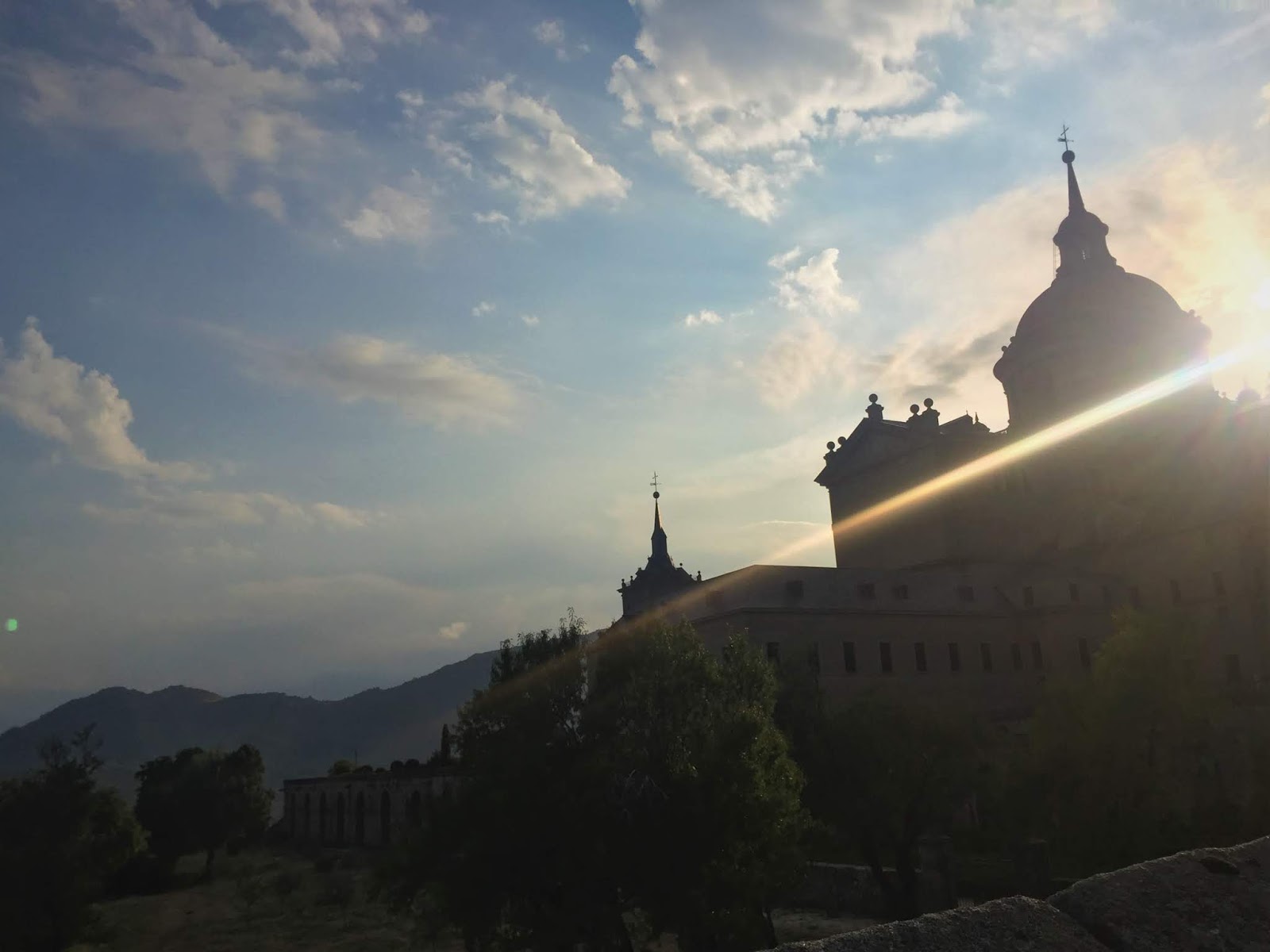
My first week in Madrid, I walked almost everywhere and saw almost everything. I visited every museum, every church and every palace and ended up feeling a little jaded. Like I've seen it all before. A graffiti drawing here, a rose garden there. Another statue of someone who lived a hundred years ago, another painting of Jesus or the king. Yawn. It wasn't until I went on a day trip to the monastery of San Lorenzo de El Escorial that the surroundings finally took my breath away. That's when it hit me that I'm living on historical grounds. That's when I realized that I can't keep walking around in the dark when the sun is shining; I have to open my eyes so that I can let the light in and learn from the past. 


The monastery of San Lorenzo de El Escorial was built in the 16th century and has been declared a UNESCO World Heritage Site. Although often frowned upon by the Spaniards, this imposing palace is one of the main monuments of the Spanish Renaissance and it seemed magical to me as I wandered through the rooms where princes dined, kings died and monks prayed. There's the chair that Philip II was carried in on his last journey to El Escorial in 1598, there's the Queen's room with a rare 500-year old organ and there's the pantheon where their bodies still rest. Or at least the caskets with their names on them can be found here. 

My favorite part is the royal library, which is absolutely magnificent. The ceilings are covered with frescoes painted by Italian artists and 40,000 ancient books have been turned around on the shelves so that their pages can get some air. Some of these books have been here for over four hundred years. They have been through fires and wars and they still stand. They survived. 


I walk back to the train station through the Prince's park, enjoying the fresh mountain air and admiring the giant trees. I take a deep breath and one last look at the mountain peaks before boarding the local train to Madrid. I've always loved being surrounded by mountains. They make me feel safe in a hectic world where nothing ever stays the same, except the mountains. They don't move. And somewhere in between them are the pages of our books. Our wars are the mistakes that we don't like to talk about and our fires are the regrets that burn inside of us until there is nothing left but ashes. Yet somehow, we survive. We become a little rustier and a little dustier, but we still stand. 

Few of us can afford to live like royalty, but while we're here, we can make the most of what we have and enjoy the little things in life. And if we're lucky, we may get a chance to walk down the Prince's path towards the sunset at the end of the tour. 

Paseo del Principe